
Let Us Talk About Lettuce
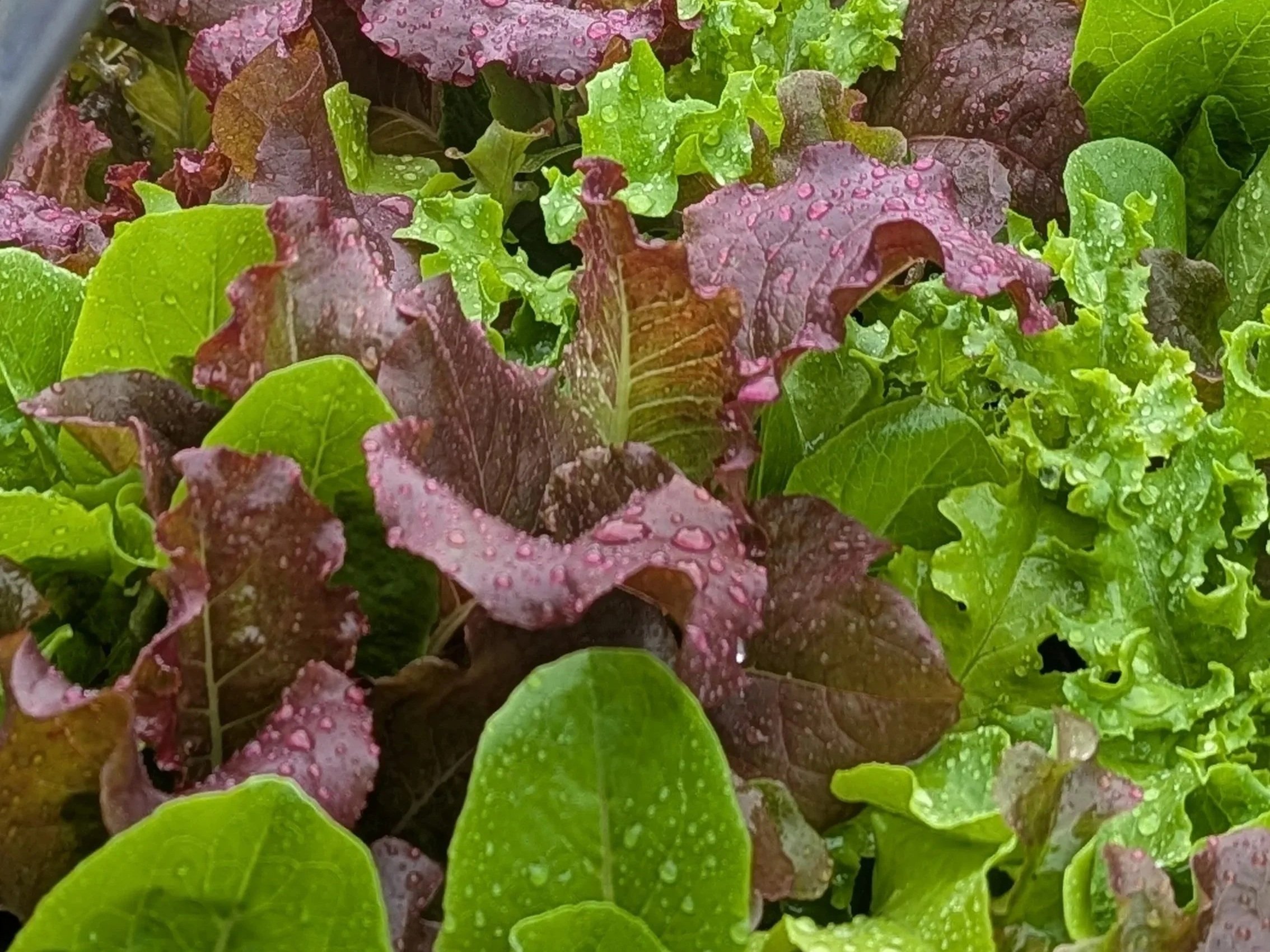
We’re currently experimenting with variations of our most popular crop—lettuce mix. Until recently, we’ve primarily relied on directly sown lettuce seed mixes harvested at the “baby” leaf stage. This unfussy approach to lettuce takes very little time up front (you just fill the seeder and walk up and down the bed a few times) and yields tender greens in about a month. You can also leave the plants in the ground to regrow and get several successive cuttings from the from the same sowing. What’s not to like?
First, baby greens are great, but sometimes it’s nice to have sturdier leaves that can hold their own in a salad with bulkier ingredients or heavier dressing. Second, although it’s really just an aesthetic thing, mature lettuce leaves have deeper color than baby greens, which makes your salad look more appetizing. Finally, there are some production considerations that motivated this experiment.
A good yield of directly sown baby greens requires a dense seeding rate, which means the plants are very close together. When plants are very close to each other, inevitably their leaves grow into each other, which blocks light and prevents photosynthesis. This results in pale, yellow or white leaves (“blanching”). It can also result in premature leaf rot in wet conditions. All of this is to say, Chris is getting tired of picking sad leaves out of the lettuce harvest during the wash and pack process.
Enter: Salanova®! Salanova is an innovative lettuce variety produced by a Dutch seed company. It is designed to grow into heads with highly uniform, small (salad-sized) leaves that all emerge from a relatively flat crown. This means the plants can be allowed to mature longer before harvest, yielding sturdier leaves with deeper color, while still allowing for an efficient harvest (a single cut above the crown looses all the leaves from the core and each other—perfect for lettuce mix). “What’s the downside?”, you ask. Time. Fuss. Because Salanova is harvested at the head stage, it takes a couple of months from seeding to harvest. And because heads require more room in the beds, Salanova seeds are typically started in cell trays and later transplanted into the bed at an appropriate spacing. So, Salanova does require more work up front, but we think it may be worth it for the increase in product quality and resultant time saving in the wash and pack process. Note: If you bought lettuce mix last weekend, you had our first run of Salanova. Did you notice a difference? We’re currently eating up all the bags you didn’t buy and we like it.
Just to keep things interesting, we will continue to trial direct sown baby greens. We have a new mix in the ground that should be ready in a few weeks. This new mix has fewer of the more delicate lettuce varieties and more red and green romaine. Supposedly, it yields a crunchier mix than the one we’ve grown in the past. Stay tuned and “lettuce” know your thoughts!
